

Most people who talk about sensor holders focus on cable protection. And yes, that matters, we’ll get to it. But if you’re a doctor, the more important reason to use a ring and bar sensor holder has nothing to do with the cable. It has everything to do with the quality of your x-rays.
Distance Destroys Image Quality
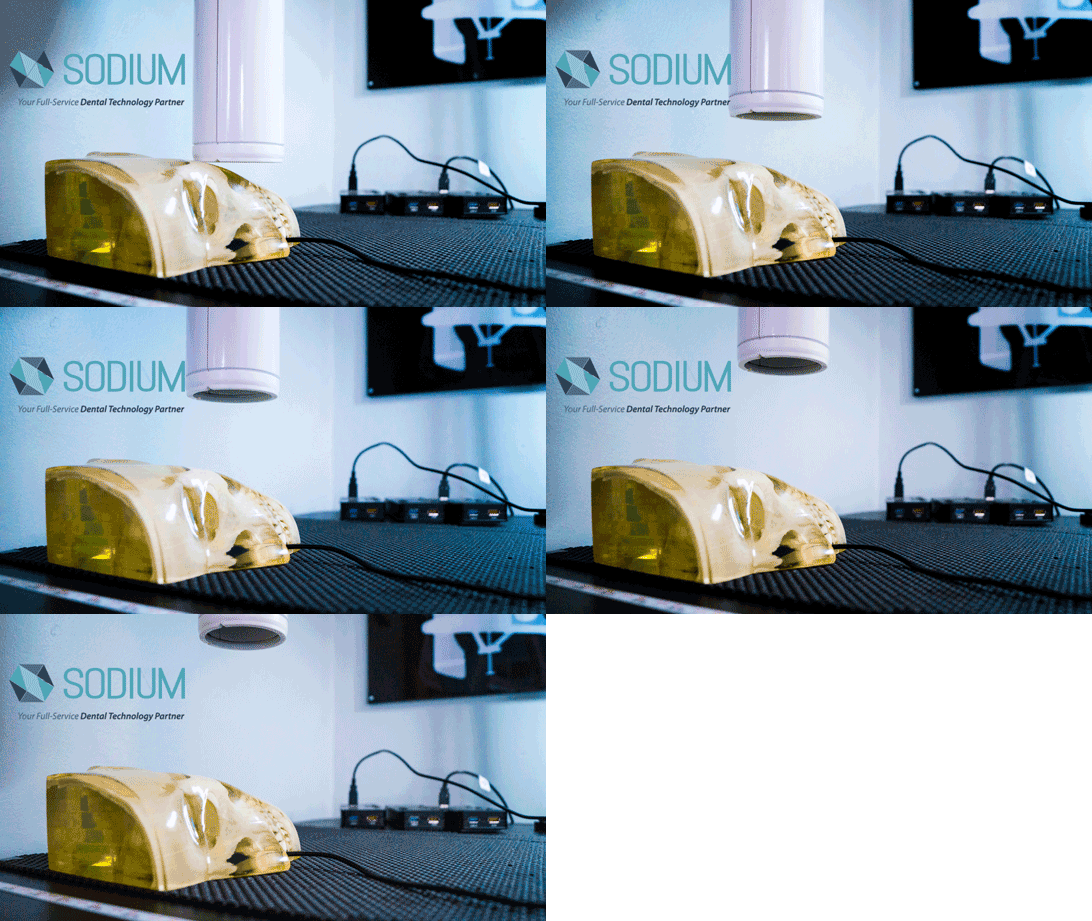
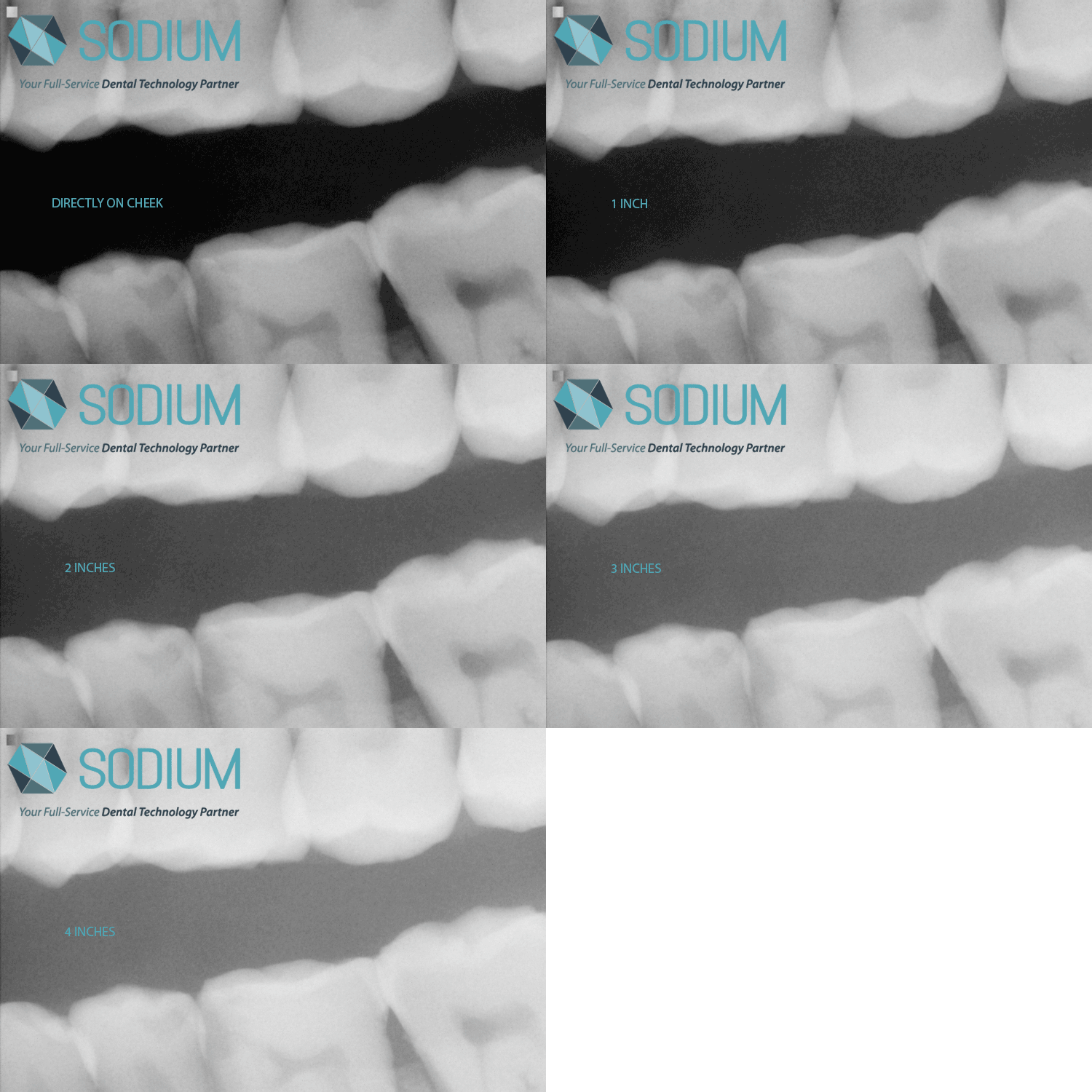
A few years back I ran a test in our shop that I think every dentist in the country should see. We took a repaired Schick CDR sensor, set up a tube head, and took a series of x-rays of a test skull. The only variable we changed between each shot was the distance between the end of the tube head cone and the sensor. One inch of dead space, two inches, three inches, four inches — same sensor, same settings, same subject.
The results were dramatic. You can see the full test here.
Image quality degrades significantly with even a small amount of dead space between the tube head and the patient. This happens because the radiation from the tube head doesn’t stay perfectly focused — it disperses as it travels. The further the tube head is from the sensor, the more the beam has spread out by the time it reaches it. Less focused radiation means a murkier image. A murkier image means less diagnostic value. Less diagnostic value means more retakes, more frustration, and potentially missed diagnoses.
This is not a minor difference. One inch of dead space makes a visible, meaningful impact on your x-ray quality. Most dental staff — especially newer ones — have no reliable way to judge that distance by eye.

This Is Exactly What a Ring and Bar Holder Solves
Here’s how a ring and bar sensor holder actually works, because I think a lot of people don’t fully appreciate the mechanics of it.
The sensor holder positions the sensor in the patient’s mouth and the bite block keeps it stable. The bar extends outside the mouth and connects to an aiming ring that sits against the patient’s cheek. When your staff member places the tube head to take the x-ray, they line up the end of the cone with that ring and the ring is designed to be pressed against the cheek so that when the cone is flush against it, the tube head is as close to the sensor as physically possible while still being outside the mouth.
That’s the point. The ring physically ensures the tube head is in the right position every single time without the staff member having to guess. The sensor is centered on the tube head’s radiation source. The distance is minimized. And the geometry of the holder guarantees the sensor is covering the area you’re trying to image.
The result is the clearest possible x-ray, at the lowest possible exposure settings, with the sensor in exactly the right place.
Consistency Across Every Staff Member
Here’s the part that matters most to most doctors I talk to. It’s not just about getting one good x-ray. It’s about getting a good x-ray every time, from every staff member, without having to supervise each shot.
When your whole team is trained to use a ring and bar holder correctly, the variability disappears. The new assistant gets the same quality image as your experienced one who’s been doing it for fifteen years. You don’t get a beautiful clear periapical from one person and a murky retake nightmare from another depending on who happens to be in that operatory.
Consistency is efficiency. Efficiency is profit. Fewer retakes means less chair time per patient, less radiation exposure, less frustration for staff, and less frustration for patients who are sitting there with a sensor in their mouth wondering why this is taking so long.
And Yes — It Also Protects Your Cable
I said we’d get to this and here it is. The cable protection argument is real even if it’s the secondary benefit.
Sensor cables fail most often from repeated bending and stress, particularly near the sensor head. Without a holder, staff members end up holding the cable in position by hand, letting it rest at awkward angles, or — and this is the one that gets us every time we see it — clamping a hemostat on the cable to hold it in place. A hemostat crushes the internal wires. Sometimes the failure is immediate, sometimes it shows up weeks later. Either way it’s a repair that didn’t need to happen.
A holder eliminates all of that. The sensor and cable are supported mechanically. No improvising. No hemostat. The cable flexes less, bends less, and lasts longer.
A good sensor holder costs somewhere between $180 and $250. A cable repair with us runs $600 to $1,800. A new sensor runs $6,000 to $10,000. The math doesn’t require a calculator.
Don’t Forget Barrier Shields
While we’re here, use barrier shields too. A barrier shield is a plastic sleeve that covers the sensor head and the cable end during the x-ray. They serve two purposes: infection control and physical protection.
From an infection control standpoint, you change the barrier between patients instead of only trying to sterilize the sensor, which can cause damage if done incorrectly over time. From a protection standpoint, the barrier adds a layer of cushioning that takes the minor bumps and scratches so your sensor doesn’t have to.
Holders and barrier shields together are about as cheap as preventive maintenance gets for a piece of equipment that costs thousands of dollars. We sell both. You can find them here.
Bottom Line
A ring and bar sensor holder does two things that matter a ton. It makes your x-rays better, clearer, more consistent, and more diagnostic by ensuring the tube head is always in the right position relative to the sensor. And it makes your sensor last longer by eliminating the stress and improvisation that cause cable failures.
If your practice doesn’t have sensor holders, or if the ones you have are old and beat up, fix that today. It’s one of the cheapest and most impactful investments you can make in the quality and efficiency of your imaging workflow.
Browse sensor holders and barrier shields here.
And if you’ve already got a sensor that’s been giving you trouble, send it in for a free diagnostic. We’ll tell you what’s wrong with it and what it’ll cost to fix.

Leave A Comment
You must be logged in to post a comment.