
A 3D Printed Crown Used to Mean Plastic
The first 3D printed dental work was resin. Temporaries, models, guides. Nobody seated a printed molar and called it permanent, because the material couldn’t hold up to years of real chewing.
So the whole profession learned one reflex. Printed means provisional. Want permanent, send it to a lab and wait.
Sure, that reflex kept a lot of doctors out of trouble. A printed crown that fails is worse than no printed crown at all. But a reflex is only as good as the day it was formed, and the thing that formed this one has changed.
The Problem Was Never the Ceramic. It Was Peeling It.
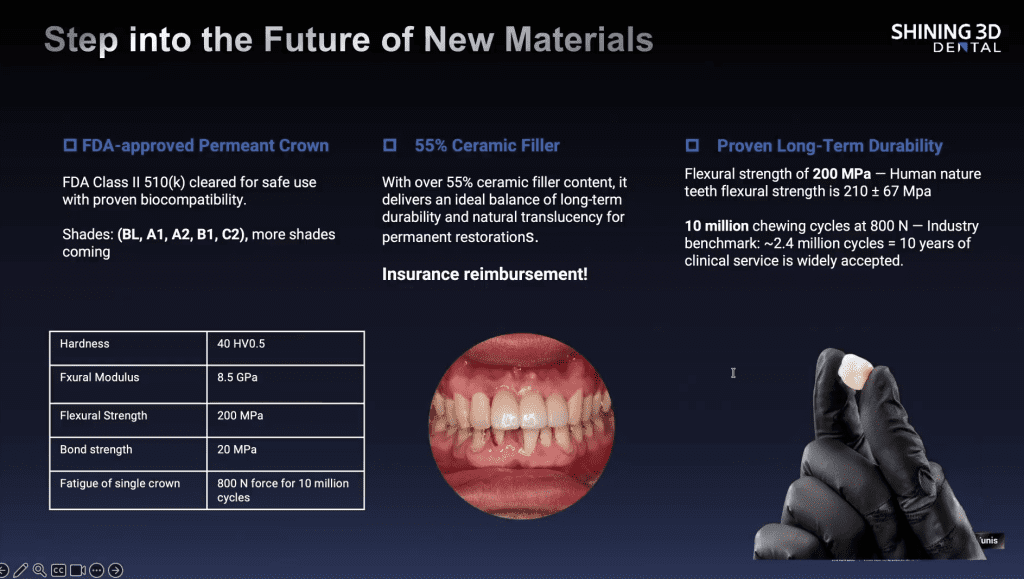
Strong crowns need ceramic, and LumiCera is more than 55% ceramic filler. So why couldn’t everyone just print it?
Because ceramic resin is thick, and a printer builds each layer by peeling it off a film at the bottom of the tank. Thin resin peels off clean. Thick ceramic resin clings, and when the printer yanks it free it stresses the crown it just made. Peel a sticker off a roll and it comes clean. Peel one off a counter it baked on all afternoon and it tears. That was the wall. Strength or speed. Not both.
What Shining 3D Patented
The fix is a technology Shining 3D calls APS, which is Adaptive Pneumatic Stereolithography (aka the Advanced Printing System, or APS, which is how you’ll see it on our product page). Instead of ripping each layer off the film, a puff of controlled air lifts the film away gently, from underneath. The crown doesn’t get stressed, and the peel takes almost no time. That’s how you get strength and speed in the same print.
The Number That Should Retire the Reflex
LumiCera tests at 200 MPa flexural strength. A human tooth runs about 210. You’re seating a crown in the same strength class as the tooth next to it. It’s rated to 800 newtons across 10 million chewing cycles, and the benchmark for ten years of service is about 2.4 million. Four times the bar.
I’ll be straight with you. I haven’t run a crown to 10 million cycles on our bench. Those are Shining 3D’s numbers, not ours. What I can tell you is the material is FDA Class II 510(k) cleared as permanent, which isn’t a clearance you get for printed plastic.
So press on the next printed crown that you print with your new Ceramix Nano. Have the reflex. Then remember it’s more than half ceramic, as strong as the tooth beside it, and cleared as permanent. It isn’t the plastic that trained your doubt.
Want to watch one come off the printer? Take a look at the Ceramix Nano here, or schedule a demo and we’ll print a crown in front of you. Call us at 1-800-821-8962 or email sales@sodiumdental.com.
Have a sensor, intraoral camera, handheld tubehead, or other easily shippable piece of dental technology that isn’t working? Send it our way, we can probably fix it. Submit your repair here.

Leave A Comment
You must be logged in to post a comment.